


For the past three years building Machine Cinema, we have witnessed a global movement of new and old creators embracing a new set of tools to tell their own stories. But something that has struck us, as the tools and market evolved was that we saw the ratio of creators telling their own stories wane next to the relentless wave of paid client jobs, memes, and social media parodies. But what brought us was a love of story. For years, we’ve been trying to figure out, what are better ways that we can support and advance the work coming out of our community. How can we help our community level up, produce better work, and tell the best stories to the world?
That was the itch behind Page One. Not another event, not another showcase. We take direct inspiration from Y Combinator, TechStars, Antler, and more from the tech ecosystem. This is a cocoon, a support network, and an incubator for great storytelling, ideas, and medium. At Machine Cinema, we believe strongly that stories can change the world.
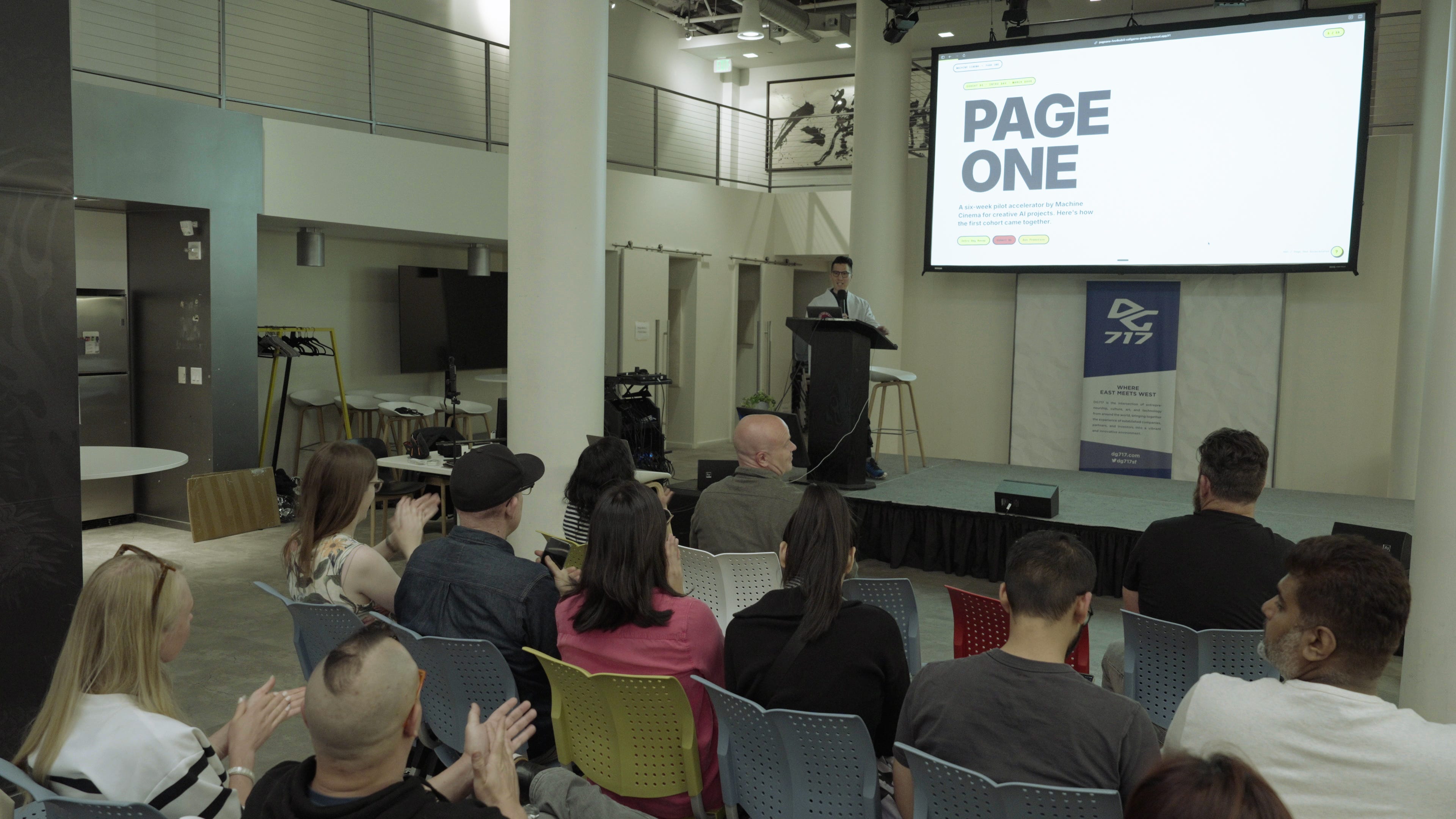
But the thing is, we’ve never done this before. We’re in uncharted territory. When we first embarked on doing GenJams, no one had really figured out how to make films in a short period of time with AI. We were all figuring it out.
From the moment we did our first GenJam, we always thought how do we expand the scope? GenJams are usually 4-hour film sprints to make a music video, short film, or commercial. But we’ve done longer ones too. 12 hours, 48 hours…but Page One is basically an 8-Week GenJam on steroids. And we’ve taken the same approach we took to GenJams, let’s learn how this actually works as we go.
That’s why we flung ourselves head first into running an accelerator program. We thought, let’s build this plane as we jump off this cliff. Let’s work with creators, lawyers, business people, our community, and our mentors to figure out what does an accelerator program look like for the AI era. Let’s just put it out there and see what happens.
More than sixty people applied. We took twenty-three. Eight weeks later, nine finished projects walked out the other side.
A massive thank you to Digital Garage. Our kind hosts gave us space and support. We could not have started without them. They’ve supported multiple communities in the Bay Area who want to grow and we’re looking forward to doing more with them.
That math is not a failure. Some people combined into teams. Some got pulled under by their actual jobs and lives. A few realized the thing they came in to make wasn’t the thing they wanted to make. All of that is the program working. Finishing is supposed to be hard, and the nine projects below earned it.
What we were trying to do
Here is the part most launch posts would never admit: we didn’t fully know what we were building.
Startups have had Y Combinator for twenty years. Filmmakers have had film school and the studio ladder for a century. There is no equivalent for a creator building original IP with tools that reinvent themselves every few weeks, because nothing around them is settled. There is no accelerator for AI. Yes, there are AI studios, events, competitions, funds, and AI tool companies financing creators. There is no dedicated accelerator for AI IP. Nobody can tell you with confidence how to copyright AI-assisted work, what protection you have over a character you generated, or how an AI-native creator is supposed to make a living. We are building on ground that is still moving.
So we did two things. We brought the hard questions into the room: lawyers, investors, and agents, because when someone asks whether they can protect the character they just built, that deserves a lawyer, not a shrug. And we told the cohort from day one that we were figuring this out alongside them. They weren’t just there to finish their projects; they were co-authors of how the program ran. The structure of Cohort 02 is something the first cohort built with us, mostly by showing me where the first version was wrong.
The mechanics were unglamorous. Eight weeks in San Francisco, in-person sessions, Friday mentoring calls, a WhatsApp thread that never slept, and an irresponsible volume of pizza. The Friday Mentor calls are where the two worlds met: Fred Grinstein on the television and creator landscape, Khayyam Khan on pitching in the AI era, Will aka Blvcklight on world-building, Evan Baily on producing and IP, Martin Gaiss on brand storytelling, Jesse Z on the microdrama market, Bailey Kobe on screenwriting. Halfway through, Seedance dropped and half the room rebuilt their pipelines overnight. That is what this medium is like right now. The goalposts move while you are running at them, and the people who finish are the ones who keep running anyway.
What we learned
Clarity beats freedom. We kept the definition of “done” loose early on, thinking it gave people room. It just gave them anxiety, and anxious people polish instead of building. The moment we got concrete about what would be on screen at Demo Night, the work got better within a week.
Teams beat soloists. Some of the strongest work came from people who arrived alone and combined forces inside the program. Finishing is partly an emotional problem, and it’s easier to keep a promise made to a collaborator than one made to yourself.
Hard questions raise ambition. The weeks with a lawyer or investor in the room were the weeks the work got more serious, because the question shifted from “can I make this” to “can I own this, and can I sell it.”
And one on me: the work was finished in May and this post is going out in July. That delay is entirely mine, the cohort has been extraordinarily patient, and it won’t happen again.
The Cohort
Tracy Swedlow walked in with a musical about Philo Farnsworth and walked out with The Living Room, a psychological thriller anthology where every story happens in a different living room and the television has become an ominous, static-fizzling presence with power over the room. She pitched us by video link from her own television conference, which nobody planned and which was perfect. Setting down a project you’ve carried for years because the room showed you a sharper one is not a small thing.
Adam Mutchler took us somewhere else entirely with Sigil Protocol, a feature-length anthology of Jungian dream logic, cryptography, gnosticism, and hard science fiction. It sounds like the fringe, but the fringe is where a lot of the audience now lives, and the question underneath his project, how idiosyncratic work finds people without being handcuffed to platforms its creators don’t own, is the right one.
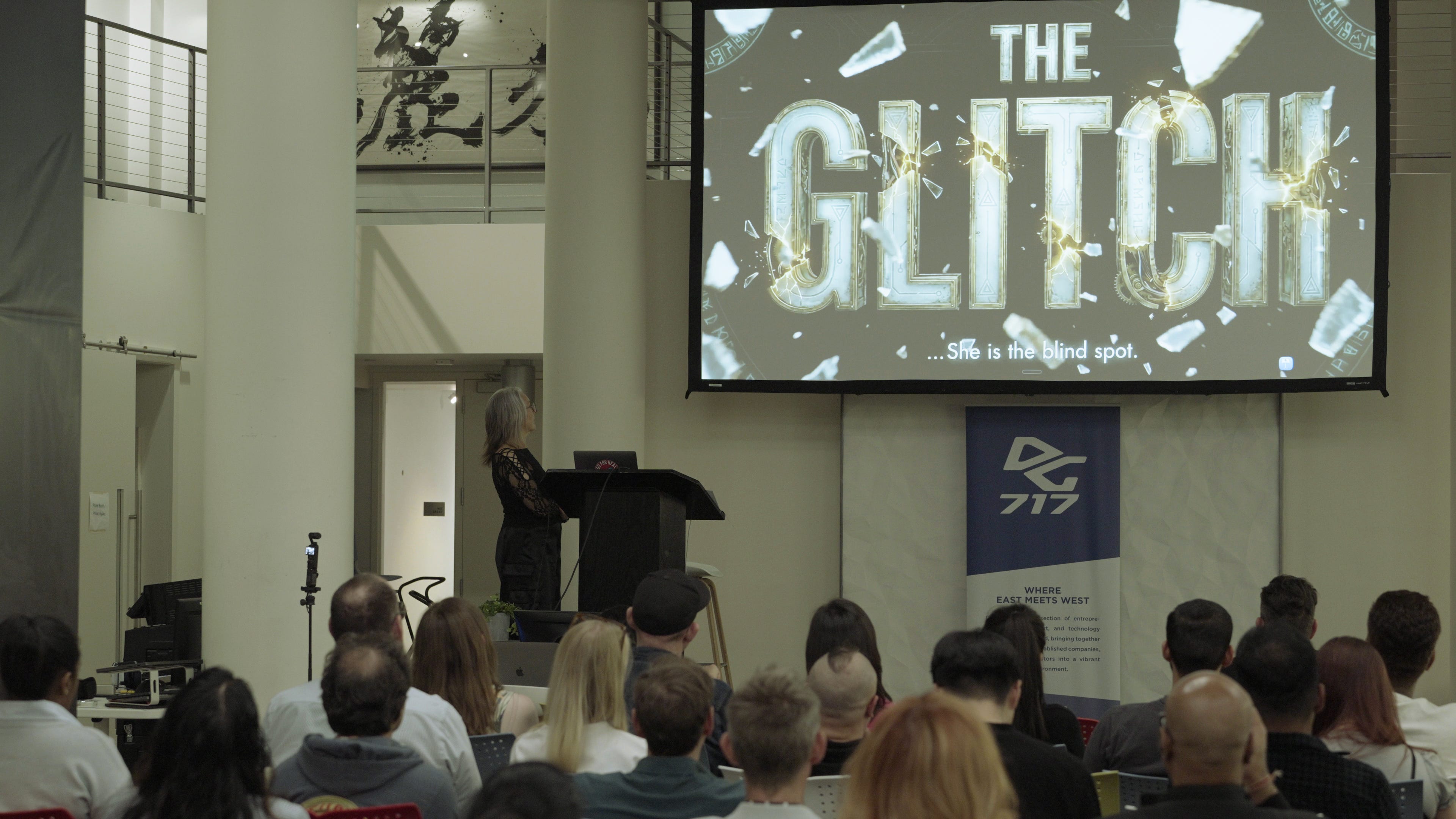
Vesica Theissen made The Glitch, an Art Deco surveillance thriller where the state’s magic is cold and geometric and the heroine’s is chaotic and alive. Vesica is an anthropologist and former dramaturge who lived on both sides of the Berlin Wall, and the piece is built out of that. A slow burn, deliberately far from the AI pyrotechnics that have dominated the last two years of demos.
Daniel Jacobs brought the energy back after the pizza with Galactic Fighting Championship, a vertical fight promotion where humans, robots, and beasts beat each other senseless. A crab creature. A goth witch. The moon. It should be disposable and it isn’t, because Daniel spent his time on the backstories, and it’s the only project in the cohort that is really a format rather than a story, with an open universe for other creators’ fighters.
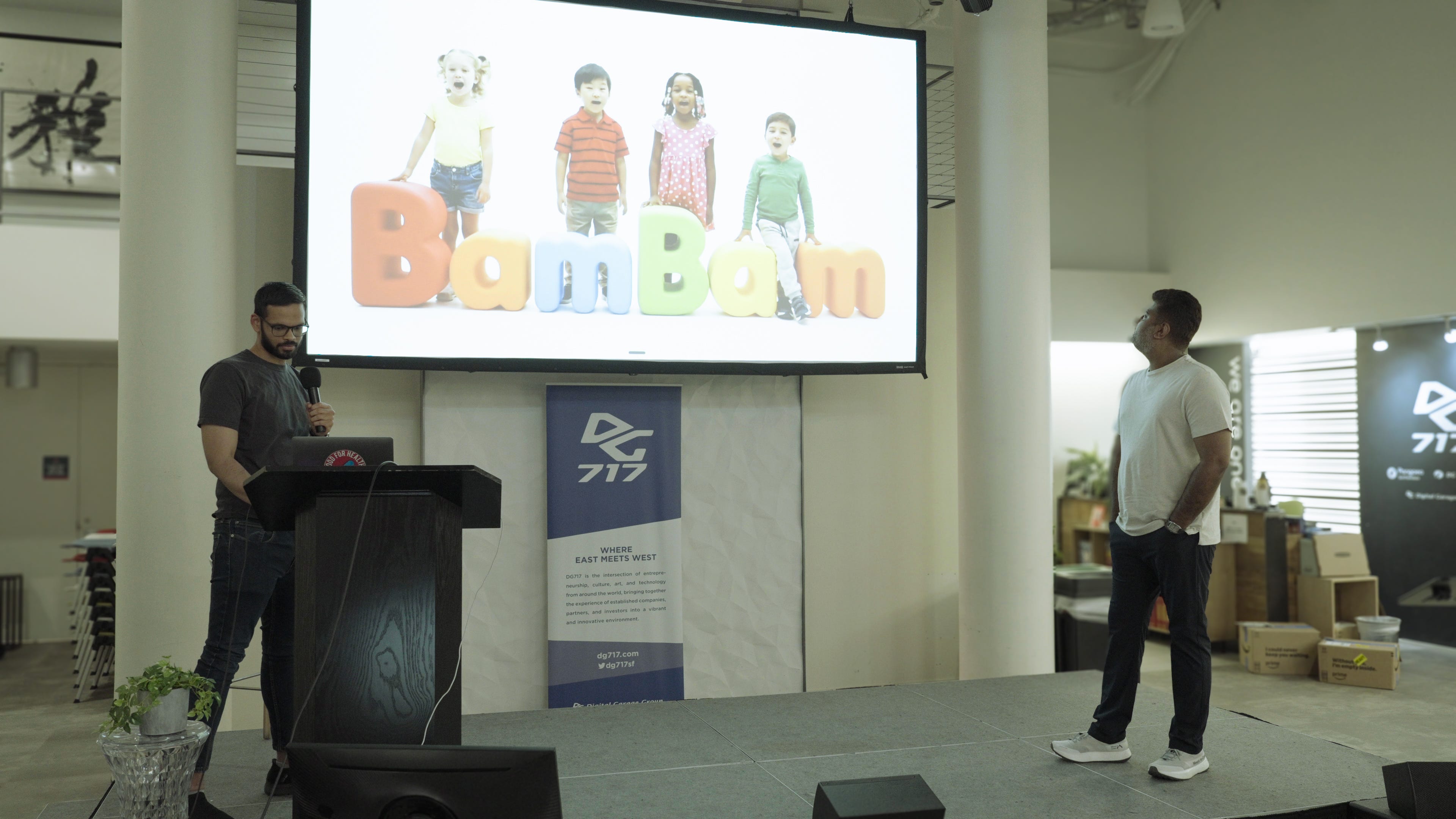
Anand Parashar was the reality check in the room. While the rest of us chased the esoteric, he calmly explained that preschool video on YouTube is enormous and badly served, and that BamBam Rhymes puts the child inside the nursery rhyme instead of parking them in front of decade-old animation.
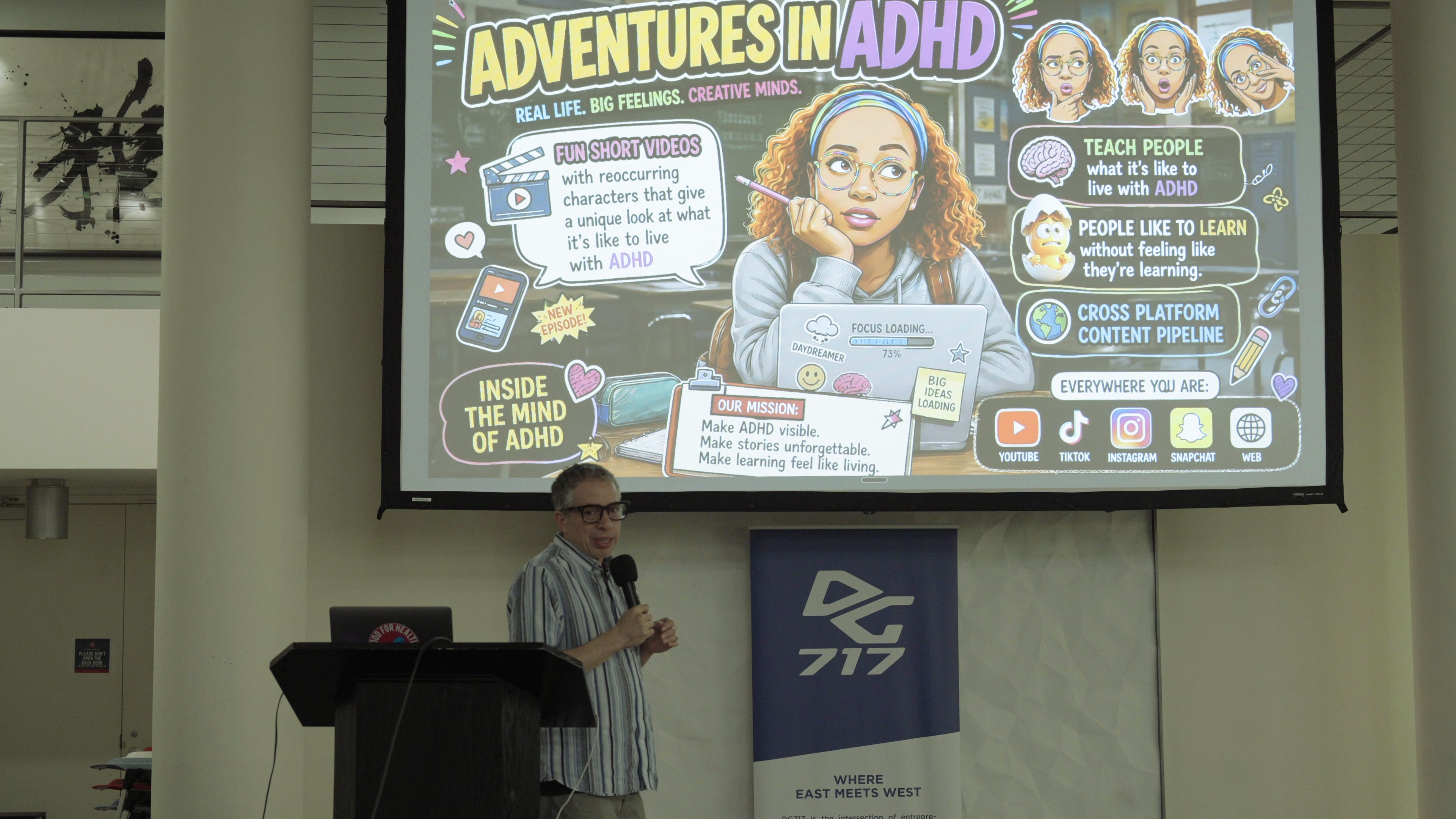
Blair Adams has more GenJam wins than anyone in San Francisco and could have coasted on a sizzle reel. Instead he made Adventures in ADHD, rendering the inside of an ADHD brain as a kaleidoscope of thoughts competing for a kid’s attention, because he has ADHD. It has heart, the thing AI work is constantly accused of lacking, because he put it there.
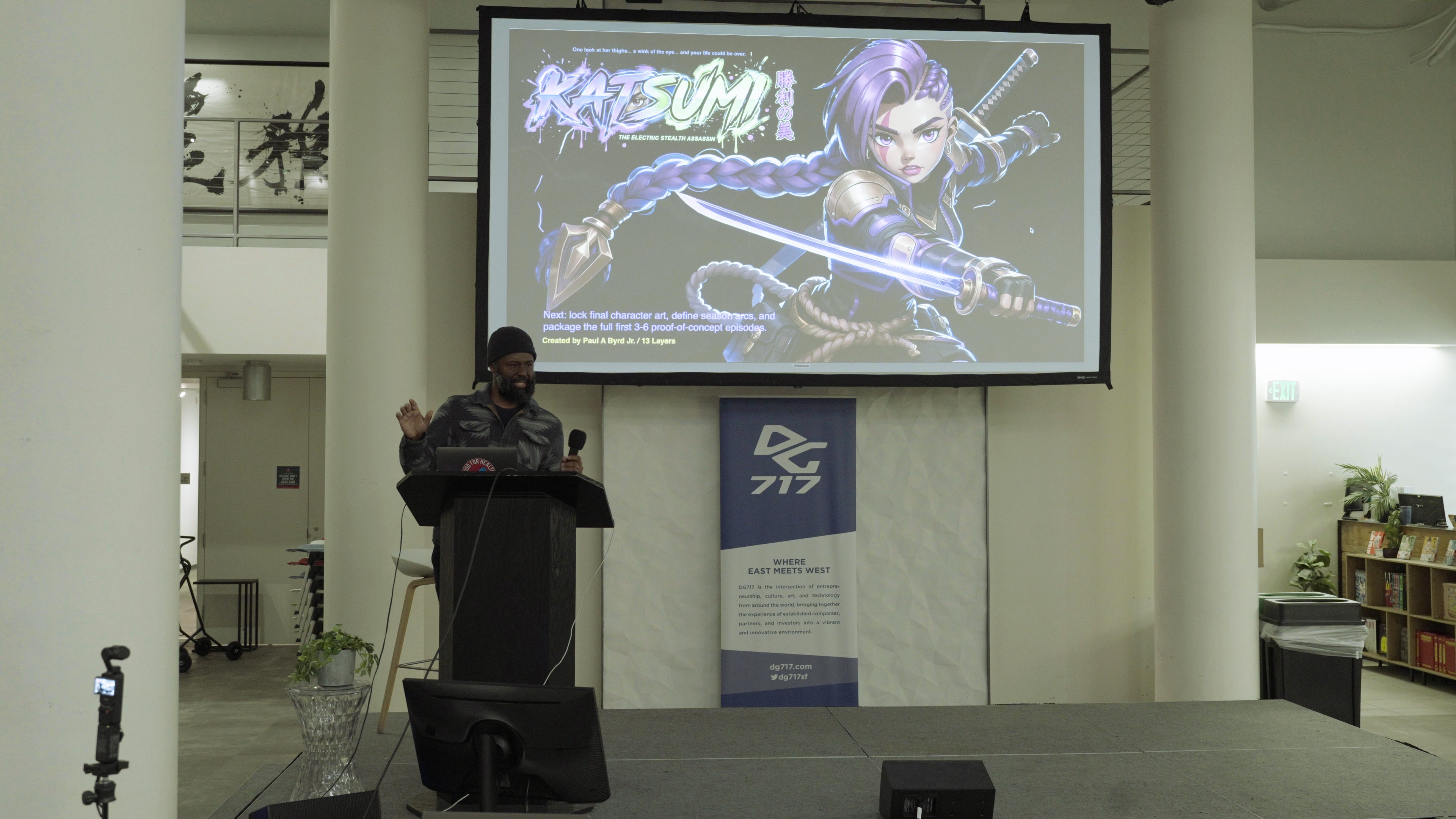
Paul Byrd built Katsumi the Electric Stealth Assassin, and the word that kept coming up was lore. He’ll tell you he wants kids grabbing Katsumi merch at Target, then show you the commercial. Most people are still arguing about whether AI can produce one good shot. Paul built an IP with a theme song and a retail campaign.
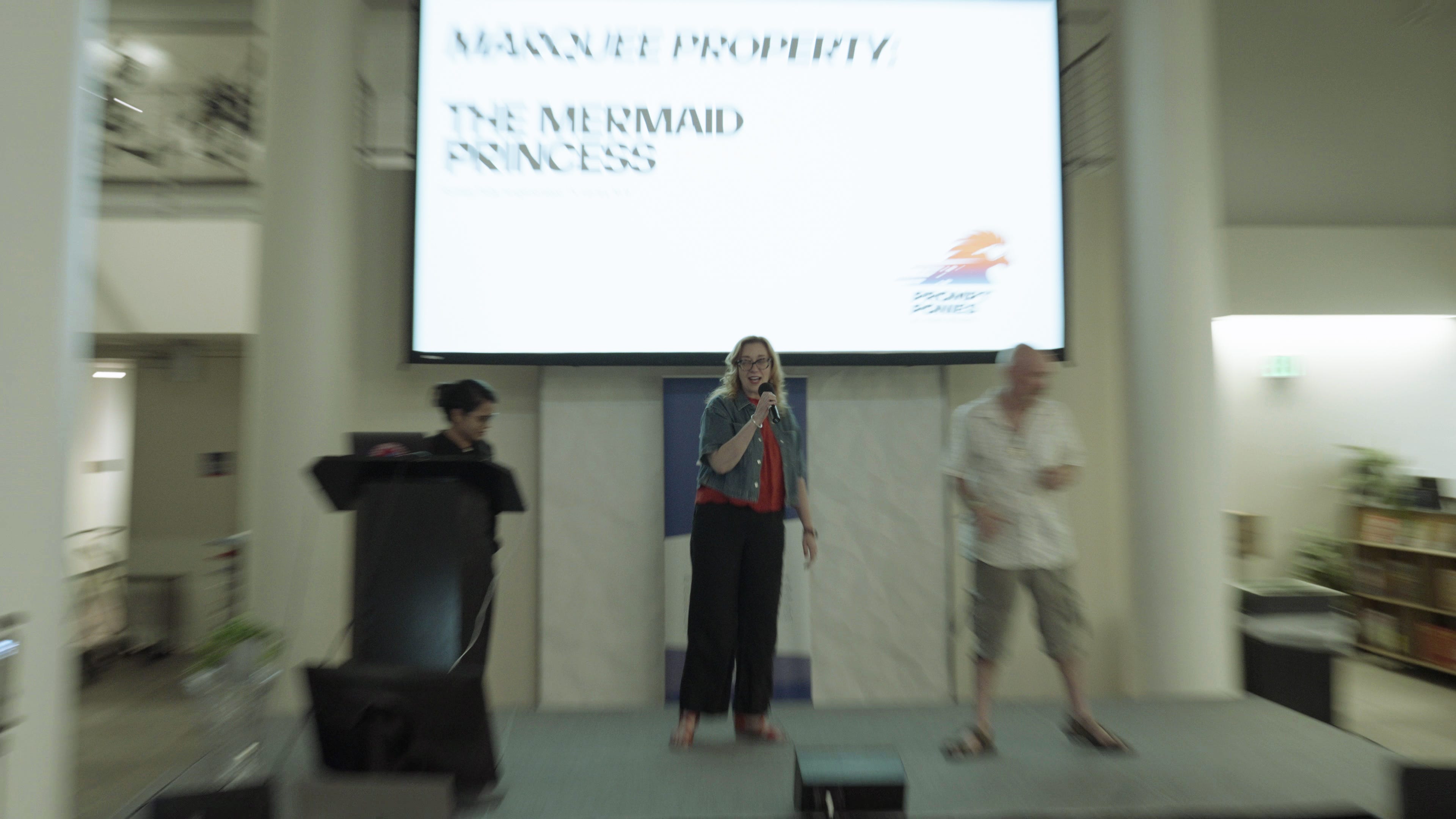
Mark Day came in solo and left as one third of Prompt Ponies, alongside comic creator and vertical drama specialist Eileen Kaur Alden and AI creative director Roshni Singh, fronted by The Mermaid Princess. They were the only team that refused to treat distribution as somebody else’s problem: the social strategy came baked into the pitch. Producing a team that didn’t exist eight weeks earlier is the second best thing an accelerator can do.
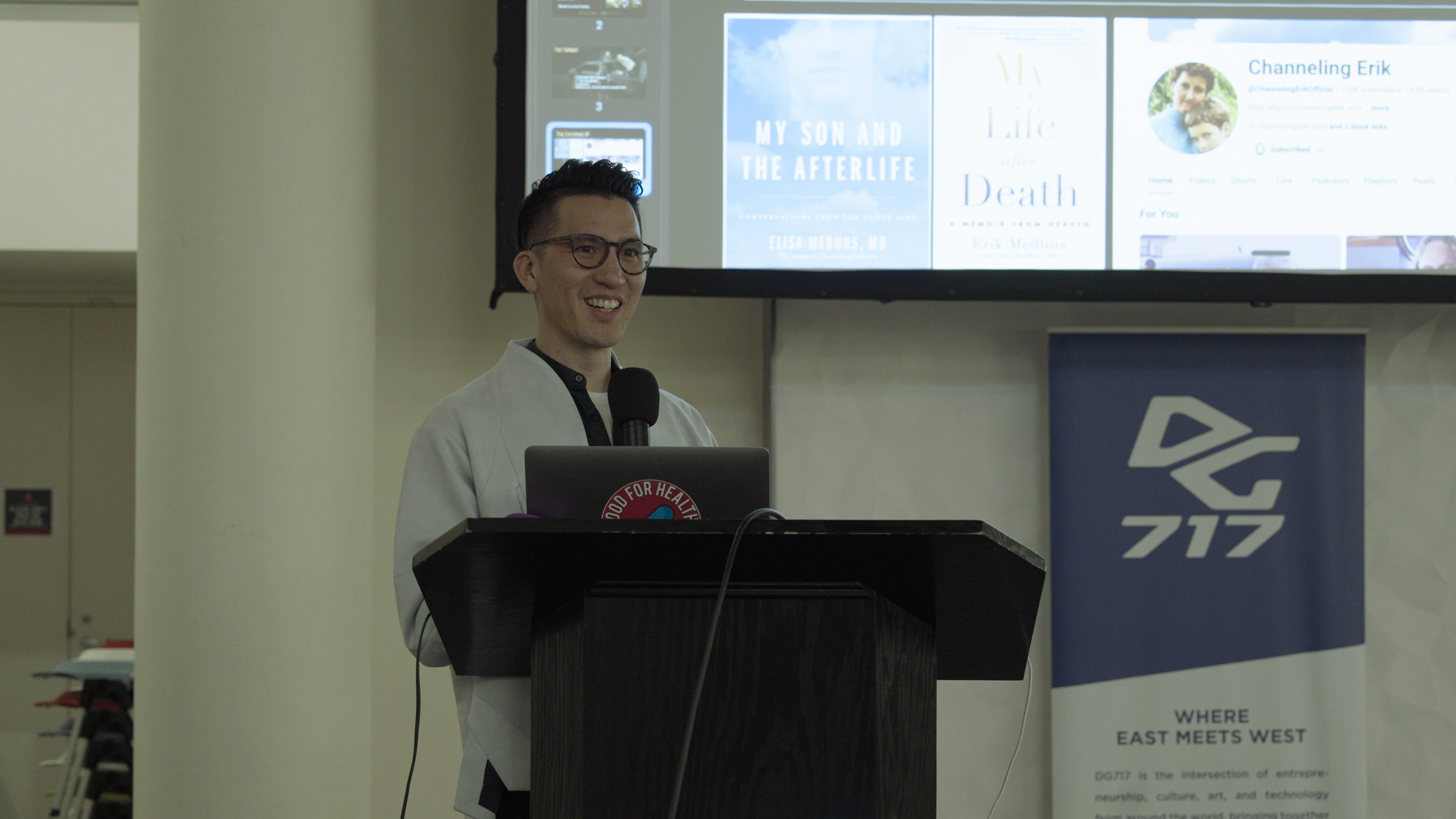
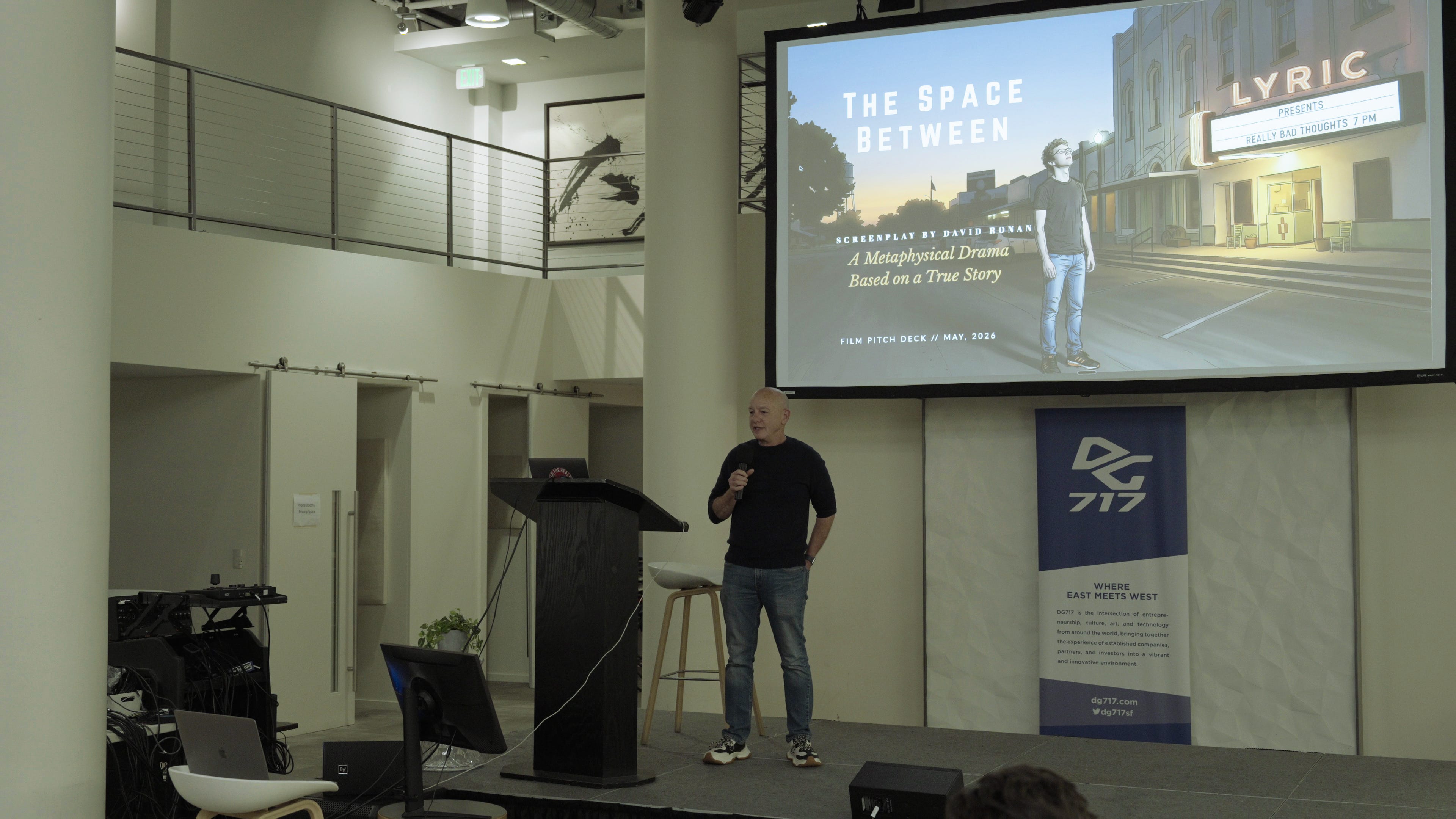
And then there was David Ronan, who drove up from LA most weeks, and who spent the early program playing with science fiction before turning toward a story he’d been circling for a long time. The Space Between is based on true events chronicled in the memoir My Son and the Afterlife: a young man struggling with depression, his death by suicide, and an aftermath where skepticism and the supernatural refuse to stay separate.
I’m not going to be clever about that one. Sometimes the act of making is what pulls a story to the surface, and I’ve never seen a clearer case. The room went quiet. It was the last thing anyone expected an AI accelerator to end on, and the only possible ending.
Step back and look at the shelf these nine sit on together. A Cold War surveillance thriller next to preschool nursery rhymes. An anime assassin with a Target commercial next to a gnostic anthology feature. A fight promotion where the moon has a backstory, next to a story about grief so real it silenced the room. No studio would have developed this slate. No genre, no format, no demographic connects it. What connects it is one community, and that thrills me more than any single project could, because it means the AI creator movement is not a niche with an aesthetic. It’s the whole spectrum of people who always had stories, finally holding the means to tell them.
What’s Next for Page One Accelerator
Becoming a filmmaker used to mean being born near an industry or moving to one, finding money before you had anything to show, and surviving a decade of gatekeeping. That filter mostly tested for endurance, proximity, and wealth. It’s now obsolete, and nobody has built the replacement. A seventeen year old in Lagos or Hanoi or São Paulo can produce a shot that would have cost a studio six figures a decade ago, and still, almost none of them will make anything anyone sees. Not for lack of imagination. Because there’s no path. No one finds them, teaches them, gives them a deadline, buys the work, or pays them.
So here is what we want to build, plainly.
Find the best AI-native creators in the world, especially in places that have never had a film industry. That’s what the community is for, and why it lives in over 60 countries across our ecosystem. Two hundred GenJams is not just a marketing number, it’s a scouting network.
Educate them, which is why the mentors matter. The gap between someone who can prompt and someone who can direct is the whole ballgame, and it closes when a person who has done the work for thirty years tells you the truth about your script.
Equip them with the structure and tools finishing requires: tokens and credits, a deadline, a room, a cohort, someone who notices when you aren’t there.
Distribute the work, so finishing means more than a post that falls off the feed. We worked with five distribution partners that would consider the best from the cohort to stream on their platforms.
And eventually, finance them. Not placing finished work with partners, which is where we are today, but backing creators themselves, on the strength of what they’ve made rather than who they know. If Machine Cinema works, an AI-native creator anywhere in the world can be discovered, developed, funded, and distributed without moving to Los Angeles and without asking permission. Do you want to help us finance the next generation of creators around the world? Our aim is to finish multiple cohort experiments in America, and eventually launch online and global Page One cohorts, focused on helping creators everywhere. This is why we work on global initiatives like the GenJam Director’s Cup, we worked on with OpenArt.
We know how that sounds. It’s a lot to hang on nine people in a room in San Francisco. But the room worked. People finished their projects and produced an impressive range of very thoughtful and profound work. And they were so kind in co-crafting this program, looking towards the future of AI creation.
This is only the first inning.
Cohort 02 in Los Angeles: Coming Soon.
Cohort 02 is in Los Angeles, and Fred is running it. The focus is horror and thriller: the genres having a genuine moment right now, and the ones that have always rewarded craft over budget. One of our biggest learnings from Cohort 01 was focus and structure would help a lot with everyone. A great horror scene is built from restraint, timing, and what you choose not to show, none of which can be bought. If AI-native production is going to compete on quality rather than novelty, horror and thriller is where it has to prove it.
Cohort 02 also opens up what a Page One project can be. Teams will build verticals, microdramas, episodic series, and social web series, the formats native to how people actually watch now, alongside traditional forms. The mentor network comes with it, Hollywood and creator economy both.
Cohort 03 goes back to San Francisco, and it’s predominantly about video games. Generative tools are about to do to game development what they’ve done to film, and almost nobody is building the talent pipeline for it. After that we keep rotating: new genres, new mediums, new cities.
Applications for Cohort 02 are open now at machinecinema.ai/page-one-accelerator. If you’ve been sitting on something and you’re tired of it being unfinished, this is the one.
If you’re interested in helping with future cohorts, with mentorship, partnership, distribution, or anything, please reach out to us. Thank you.
Cohort 01 ran at Digital Garage in San Francisco. Thank you to Digital Garage, Google DeepMind, OdysseyML, ArtCraft, Rosebud.ai, FlikAI, and ImagineArt, to our mentors, and to our distribution partners Fairground, Escape.ai, and Alchemy.
But let’s hear it from their own words. Mark Day, one of our amazing creators from the Page One Cohort 01 recounted his experience in his own words:
The night Machine Cinema became pure cinema.
It’s the climax of the AI creator-community Machine Cinema’s first Page One Content Accelerator program.
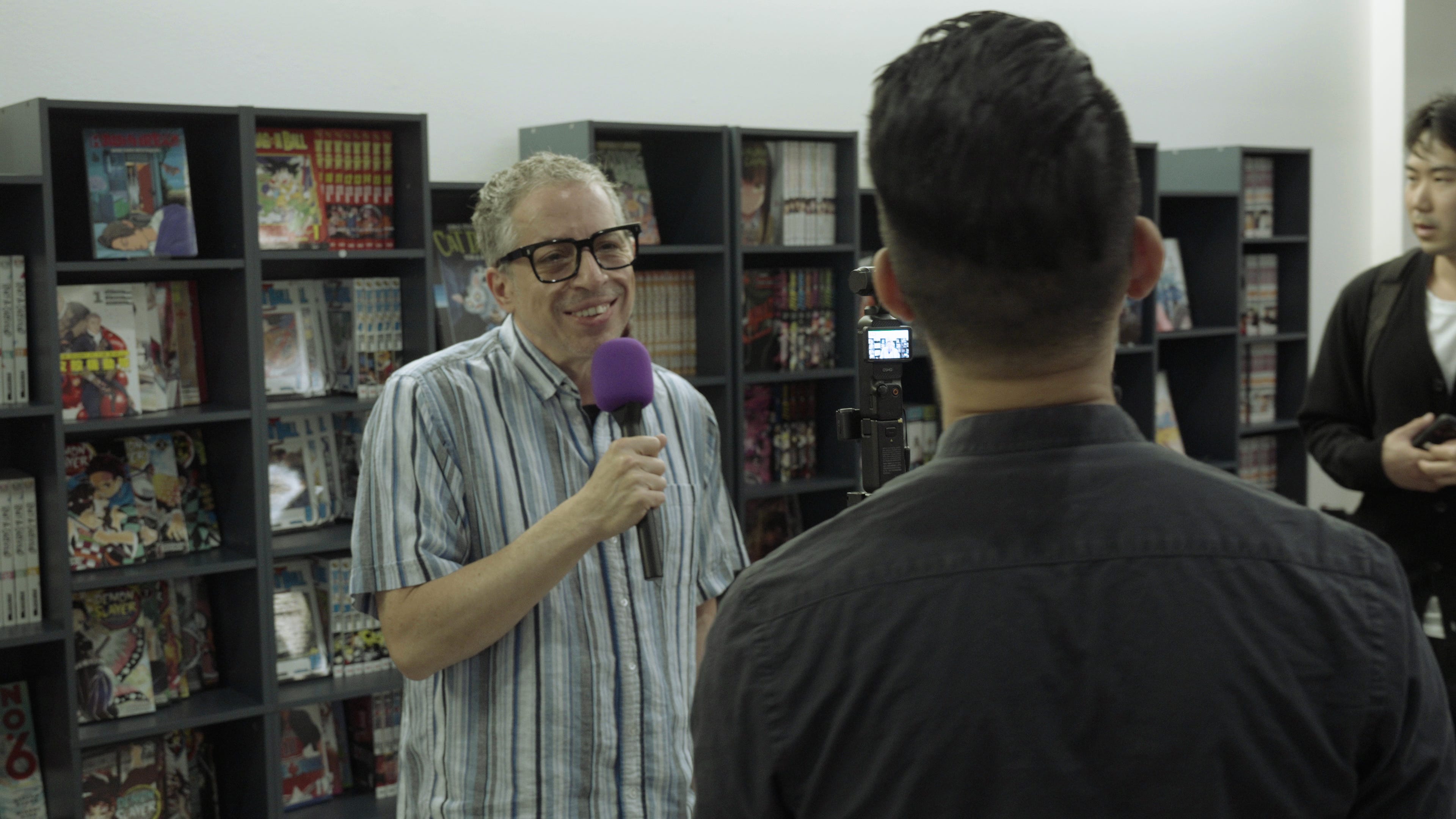
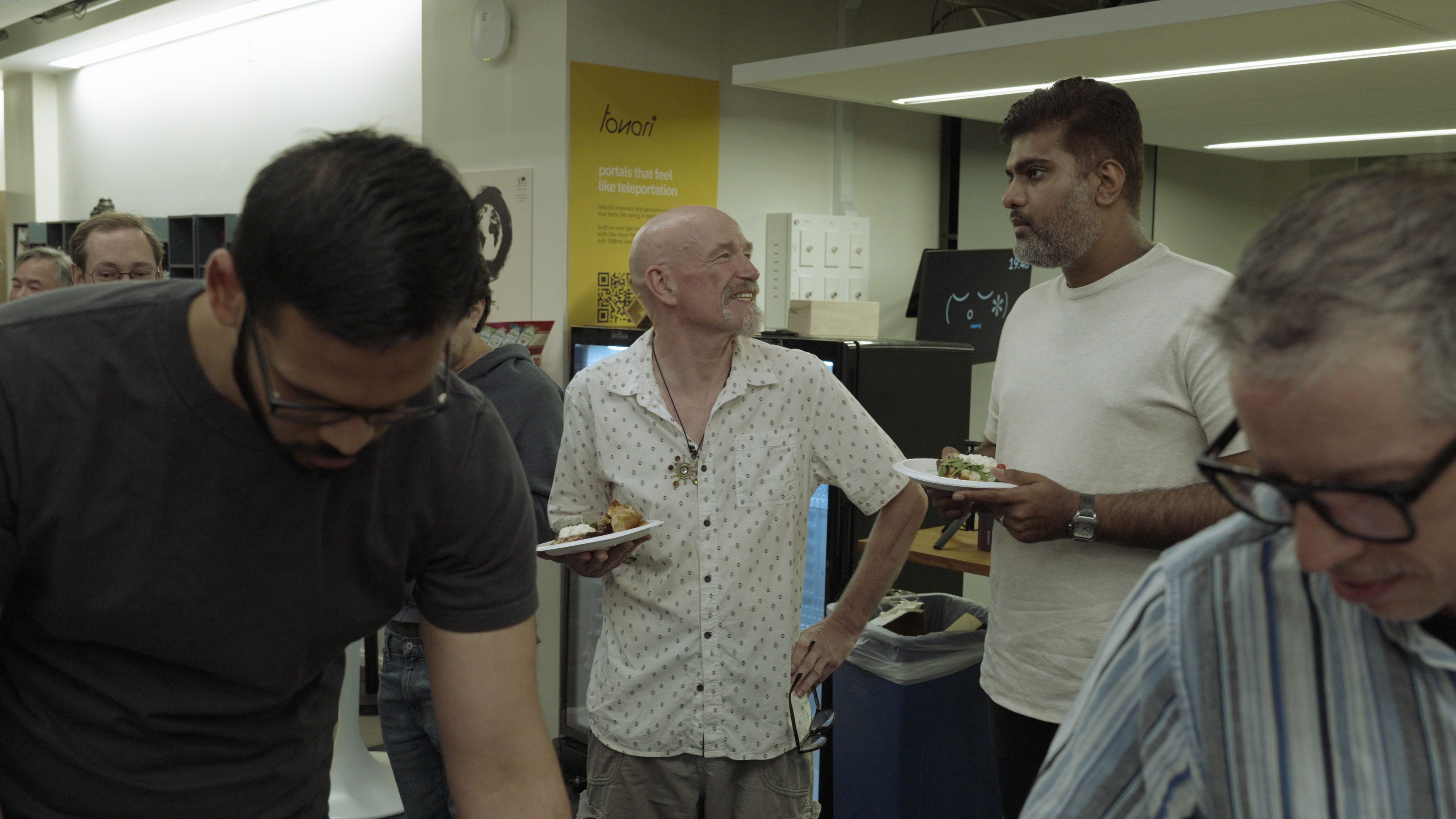
Demo Night, on a Tuesday night, at Digital Garage, a coworking tech space on SF’s Market Street, where the walls are lined with physical media.
And not just any physical media, but shelf after shelf of Japanese manga. A genre where every page feels like a storyboard, packed with perspective, character and cinematic action.
According to the ubiquitous Luma invite, the Page One cohort had been “heads-down in San Francisco — writing, shooting, prompting, training, breaking things, fixing them, and building original IP with the full stack of AI tools. No theory. No vibes-only demos. Real IP, real pipelines, real proof.”
And it was that.
But, as the AI would tell you if it was writing this, it was also much more.
It was (with all due respect to my fellow cohort members) the classic “rag tag crew of misfits with individual dreams and a common purpose, coming together to do something special” story.
You know the trope. The kids who come together to stop the developers from demolishing the rec center to build a business park. The Goonies hunting treasure in the caves under Astoria. The Seven Samurai, but with laptops and prompts.
And whoever scripted the final act (the universe, perhaps?) stuck the landing.
A room filled with the raw energy of ideas being smooshed into an assortment of content shapes using tools that speedrun their own Darwinian evolution.
You can see why folks like noted AI skeptic Seth Rogen make shows about people making movies.
Because in a cohort like this, everyone shows up with a story.
Or a story about a story.
And how they want to tell it.
Why it’s personal. A passion project. Or why it’s just perfect for that whole exploding vertical drama market. Or some combination of the above.
There was something slightly old-school San Francisco about the whole thing.
Tech may have displaced a lot of the odd events discovered via alt-weeklies. My memories of weird cable-access TV are dim. And even I have to admit that the bulk of contemporary Burning Man art is a little less chaotic and DIY than it used to be.
But the spirit of “want to see a thing? Just make the thing”? That’s very SF.
Sometimes GenAI feels like “cable access CGI,” even when the projects are aimed at emerging distribution channels, vertical screens, well-established genre audiences and beyond.
So what happens when you put out a call for creators with “taking the next step” aspirations?
Things get nerdy pretty quickly.
Yes, there’s typing words into boxes to make pictures come out.
But there’s also node based workflows. Workarounds that might not scale. AI video platforms that have failed to generate coherent UX. Frustration at bottlenecks that eat up gen-credits and patience.
Then delight when things go right.
What if the much-anticipated Seedance model solves everything?
Spoiler, it doesn’t, entirely.
But it showed up midway through the program, and it does solve a lot of things. Up to a point.
The goalposts keep moving, even as the AI-averse sit in the stands, grousing.
This is the culmination of a couple of months of in-person mingling, Friday afternoon Zoom mentoring, WhatsApp message threads. Machine Cinema founder Minh Do’s bad jokes. And pizza.
Between Page One and assorted GenJams, my diet seems to consist of AI pizza.
And tonight was no exception.
There was pizza. There were people, including a smattering of industry folk. Creators, hungry for a new narrative. Maybe a redemption arc or two.
Tracy Swedlow started the program with a musical based on the life of TV pioneer Philo Farnsworth, before pivoting to the place many a TV calls home, The Living Room.
It’s a peek at a surreal, Black Mirror-esque anthology where the television is no longer a World’s Fair wonder but an ominous, static-fizzling box that becomes a dominant presence in the room.
To add to the prevalent screen-theme, she was telepresent on Zoom from the TV of Tomorrow Conference, which she executive produces. A scheduling issue, but it added to the vibe.
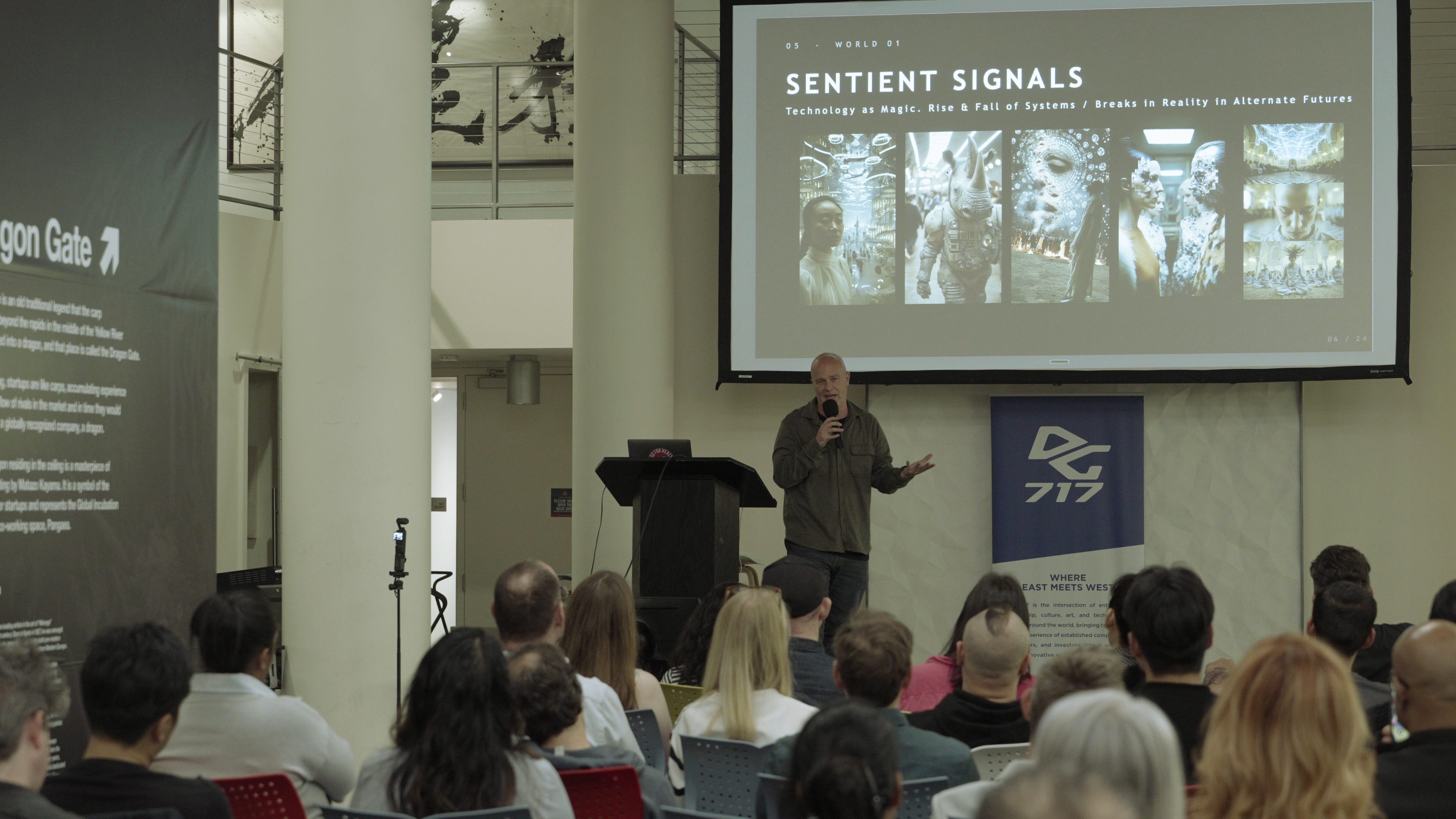
From the Twilight Zone/Outer Limits intrigue of the claustrophobic Living Room, we went deeper into the strange conceptual multiverse of experimental, out-there AI, with Adam Mutchler as tour guide.
We live in an era when the liminal spaces of the Backrooms goes from meme to hit movie, and AI artists like Gossip Goblin are getting the kind of mainstream coverage once reserved for the shock tactics of the Dor Brothers.
It’s a curious constellation of creativity that Adam Mulcher’s ambitious project hopes to connect the dots between.
Ready for movie-length anthologies of content rooted in Jungian fever dreams, cryptography, gnosticism, hard scifi and conspiracy theories?
That may sound fringe. But the fringe is a draw these days.
My own anime-loving teen digs liminal spaces, body-horror manga and esoteric story telling. My own AI fandom leans towards the colorful surrealism of niceaunties.
Do we need alternative ways of enjoying esoteric creativity? Ideally not handcuffed to platforms creators don’t own? Adam has thoughts about that.
Two presentations in, we’re not in Kansas anymore, Dorothy.
We’re getting off-the-wall thinking. The thinking behind the thinking. Video that might make you want to lock the TV in another room. And storytelling that, like good science fiction, uses futuristic scenarios as a prism to frame personal experience.
Next up, The Glitch is art-deco, surveillance state scifi infused with the first-hand experiences of life on both sides of the Berlin Wall, from former dramaturge (look it up) and anthropologist Vesica Thiessen.
With nods to cult sci-fi noir Dark City, A Handmaid’s Tale and international academy award winner The Lives of Others, The Glitch is more slow-burn than the showy AI pyrotechnics that have dominated AI demos, a trend we seem to be moving beyond.
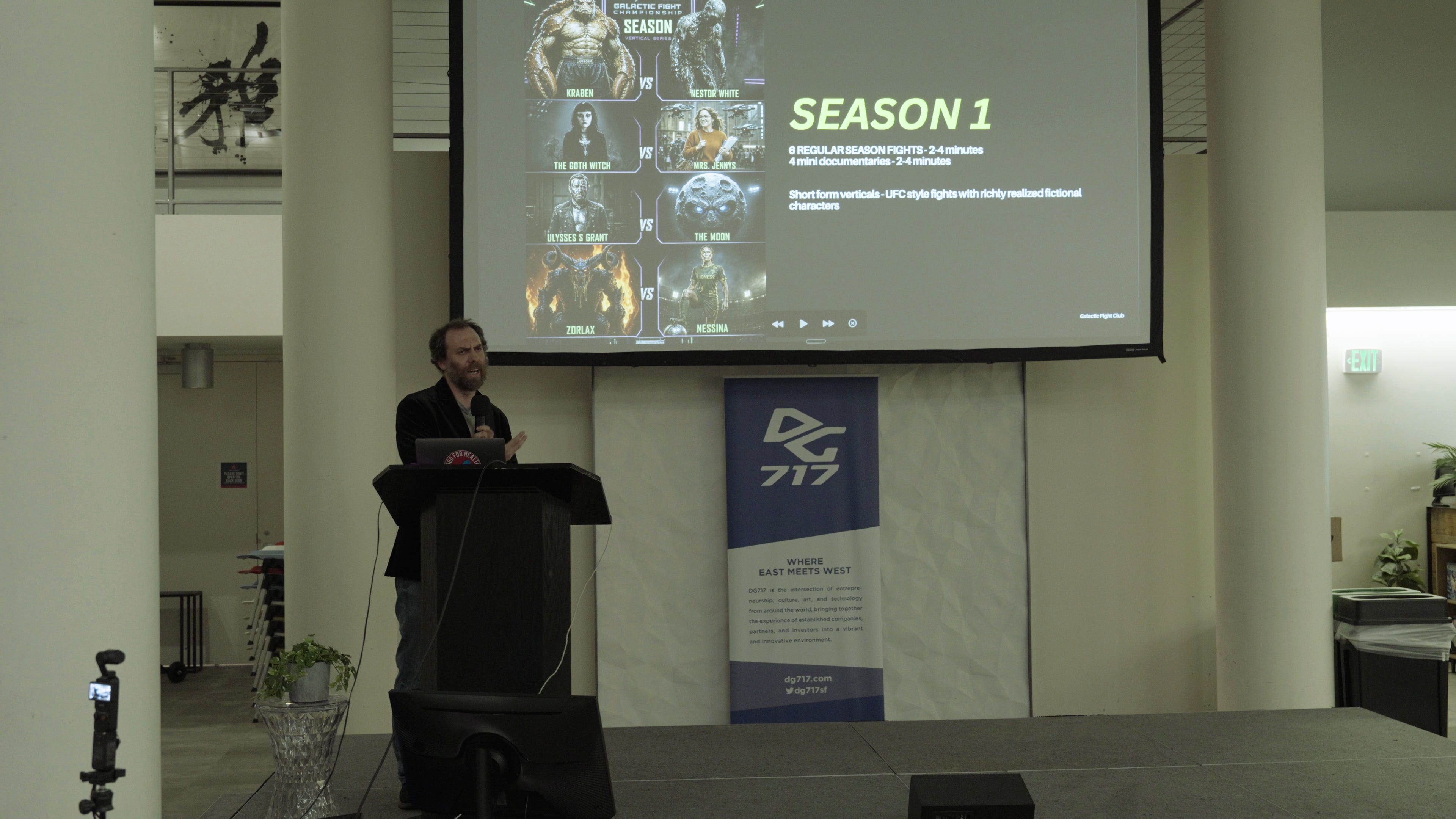
Following a break for carb-loading AI pizza, Daniel Jacobs brought the energy back with his nascent Galactic Fighting League IP.
It’s an unhinged take on UFC-style combat paired with classic wrestling character tropes, smacked on the head with a folding chair made of AI graphics, and built for TikTok, YouTube and guilty-pleasure energy drinks.
Watching a crab creature or a goth witch go at it in the GFL arena is fun. But it’s the backstory moments that make it more than Mortal Kombat gone mad, as Daniel’s own ragtag collection of unlikely comrades, including a school teacher and the moon (yes, the moon) give it a Fast & Furious “it’s all about family” vibe.
To remind us that the esoteric Bay Area is also home to focused AI entrepreneurship, cucumber-cool BabBam CEO Anand Parshar showed us all what market-minded business building looks like.
With nursery rhymes. F’real.
Reality check! Pre-school kid content on YouTube is huge. And the BamBam platform gives that overlooked media reality a personalization spin, letting parents create videos where kids get to be in the videos, not watching years-old YouTube clips with dated animation.
Old McDonald had a … timeless, agentic, scalable business plan. Or at least, he does not.
It’s not quite the personalized storytelling seen elsewhere on the night, but Anand’s customers have no complaints, and the output’s personal to the kids watching the videos, over and over.
Blair Adams is a stalwart presence in the SF AI scene, with a sizzle reel that shows why he’s the current holder of the Galactic Fighting League belt for most GenJam wins.
He’s got traditional film making chops, lives alongside Paul Byrd at the edge of what the technology can do, and the moxie to call his AI creative studio Imitation Films.
He’s also got, it turns out, a little ADHD.
And while his reel has a “could turn his hand to anything” vibe, his work often feels subtly personal.
So when he applies his technical prowess and evident good nature to something that feels more like IP than stand-alone showcase, with a first look at his edutainment series Adventures in ADHD, it’s got heart and soul.
You know, those things AI ain’t supposed to have.
Alongside plenty of “how’d he do that?” animation that captures ADHD information overload perfectly, with a kaleidoscope of thoughts vying for his young protagonist’s attention.
No two projects felt the same. Though everything carried personal fingerprints of some form or another.
Katsumi the Electric Stealth Assassin, Paul Byrd’s high voltage anime series in development may not flag up the creator as an undercover assassin.
But with the word “lore” getting thrown around a lot, Paul’s deep love of the genre feels as personal as anyone’s leap from thinking about it to making the thing.
There’s nothing stealthy about the world building on offer, and Paul won’t just tell you he’d love to see kids grabbing Katsumi merch at Target. He’ll show you.
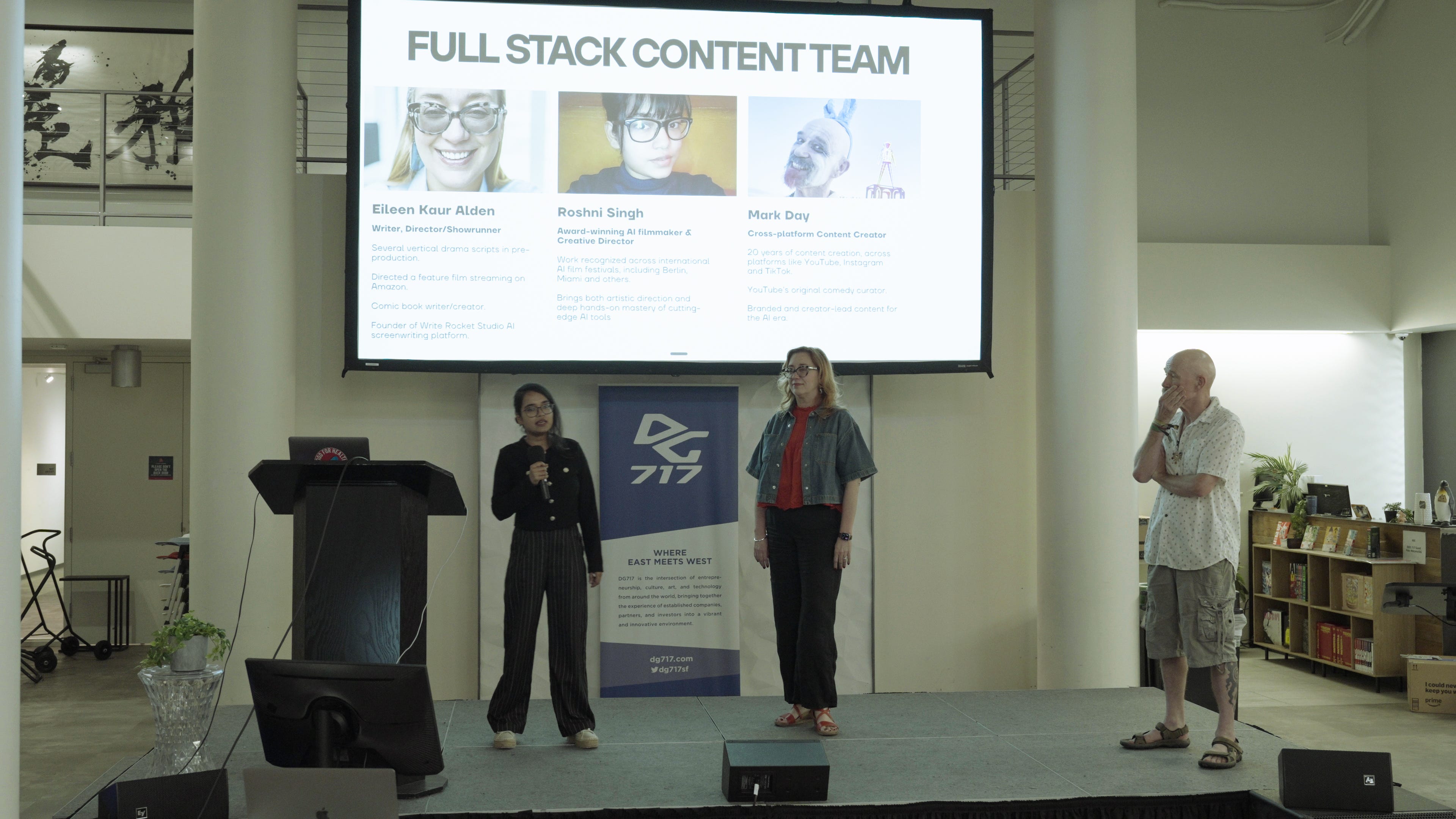
Me? Having connected with comic-book creator and vertical drama maven Eileen Kaur Alden, and dedicated Roshni Singh, we studio’d-up as Prompt Ponies around Eileen’s slate of vertical drama and horizontal fantasy IPs.
With interest in vertical drama peaking, and more opportunities for AI content opening up in general, there’s already interest in The Mermaid Princess.
While this commercial AI studio slate may be more focused on “what the market’s looking for” than some of the Page One cohort’s solo outings, our preso came with social media strategy baked in, and the versatility to move beyond the standard AI short-film calling cards into, well, what Machine Cinema promised.
“No vibes-only demos. Real IP, real pipelines, real proof.”
And if none of this feels quite like the cinematic ending I talked about earlier, perhaps you had to be there, sitting at tables with folks mostly outside the traditional media infrastructure, trading prompt advice and hot takes on new AI models. Getting to know people, and still able to be surprised when they lay it all out there.
And for me, the real season finale/end of the movie moment arrived quietly and captivated the room, via David Rohan and his project The Space Between.
David had been driving up from LA most weeks. He and I messed around with some scifi serial production, genning robots, cryo chambers and astronauts on a space breeding mission (yes, really, see the Prompt Ponies for details).
Eventually, though, he started applying new AI skills to a story he’s been orbiting for some time. Based on true events, chronicled in the memoir My Son and the Afterlife, it’s the story of a young man struggling with depression, his suicide, and an aftermath where skepticism and the supernatural intertwine.
I mentioned Burning Man earlier.
Having documented the creation of the 2016 incarnation of the event’s sacred space, known colloquially as the Temple, I recognize that sometimes stories call people to create.
And sometimes the act of creation is what draws stories to the surface. Particularly when those stories are deeply human, vulnerable and perhaps hard to articulate.
Which is why I believe creativity is for everyone, and damn the gatekeepers.
You spend a couple of months making your thing. Alongside people making their thing.
Then one night, out of nowhere, you’re watching someone talking about life, death, the aftermath of loss, and experiencing it through sadness, and humor.
And wanting to tell that story visually, so it can travel, from screen to screen, touching other people in the process.
Whatever expectations we had coming into the Page One program, I’m not sure any of us imagined that sort of very human ending.
On a night like this, Machine Cinema is just cinema. Cinema by people, for people.
Amazing
Sorry, but it's just too long, way too long. I guess most people cannot read all that. Maybe put an executive summary or something.