


Work in Progress is Machine Cinema’s weekly op-ed series exploring ideas at the intersection of AI, creativity, and culture. If you’re interested in contributing, please reach out. Selected submissions will be featured and we will promote the author’s blog or work alongside the piece.
This is my second annual installment exploring how authentic storytelling collides ( or vibes?) with synthetic content. We aren’t seeing the firehose effect that seems to be taking over use cases like advertising and animation, but we are seeing meaningful adoption and experimentation in documentary and unscripted, which is what I focus on.
A bit of context on me: Besides my work with Machine Cinema, I’m a 20-year producer and executive from the unscripted documentary space, having been a senior executive at A&E, at Vice Media, and at Anonymous Content where I headed up their Non-Fiction efforts from 2018-2020. Here’s a snapshot from the good ol’ days in rooms full of people making unscripted stuff.
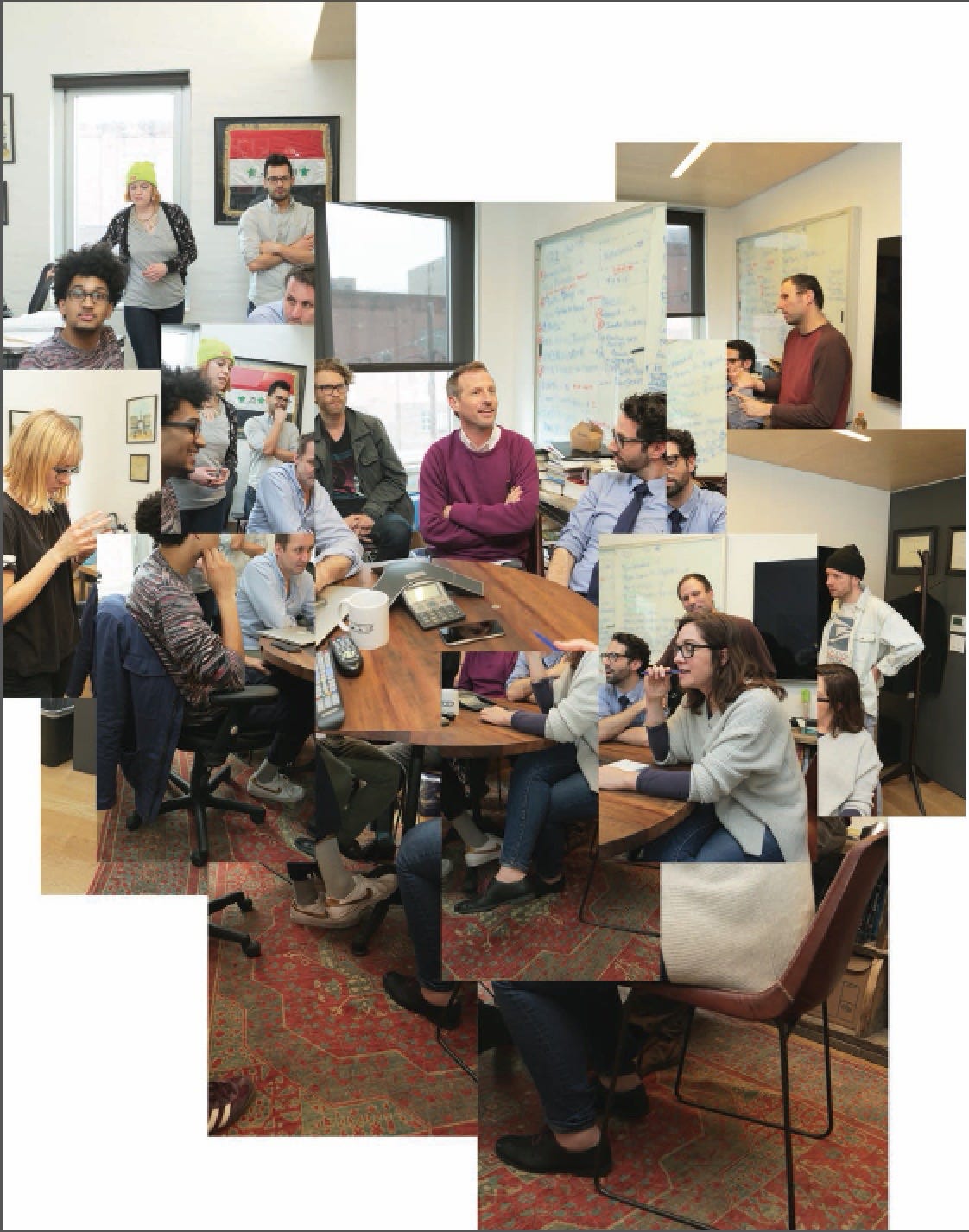
I remain close to my Non Fiction TV/ Film community, building bridges to new emergent technologies; I teach the AI for Documentaries course at Curious Refuge, and I’m a fellow with Stanford/ USC’s co-founded Starling Lab where the work centers on synthetic media and data integrity.
The evolving space between synthetic and authentic storytelling is a subject I'm deeply passionate about. I’ve been a participant in previous technology-media cycles and similar chapters of unscripted experimentation and market growth: from reality TV, to digital publishing, to the premium documentary boom. The innovation flowing through generative AI filmmaking is finding its way into documentary, invokes a new cycle to observe both for its outputs that can excite us creatively, but also important question marks about execution, ethics, and impact.
This report is my attempt to keep tabs on the growing list of experiments and applications of GenAI as a tool suite and technology for non-fiction content. My filter looks at mostly broadcast and feature-length films, with an eye out for short films that push the genre in interesting ways. There’s obviously a lot happening in social video as well, but these criteria are my way of tracking what breaks through into something we might call mainstream. Those distinctions get fuzzier every year, but for now they signal to me higher effort, higher impact, and where we might expect real opportunities and jobs to grow.
In comparison to my report a year ago, there are some trends to note…
the quality of the outputs is undeniably improving, uncanny valley complaints are diminishing.
Audiences when presented with transparent narratives are trending more comfortable, less backlash among critics and viewers anecdotally.
Legal questions do seem to be progressing towards precedent and settlements we can adhere to.
And as more people use and interact with these tools, ethical conversations are growing, raising the question of what is the optimized value of utility of these tools in authentic storytelling. And what kinds of experiments are possible?
This year I tracked new entries and also dug back into research to find some things I missed last year.
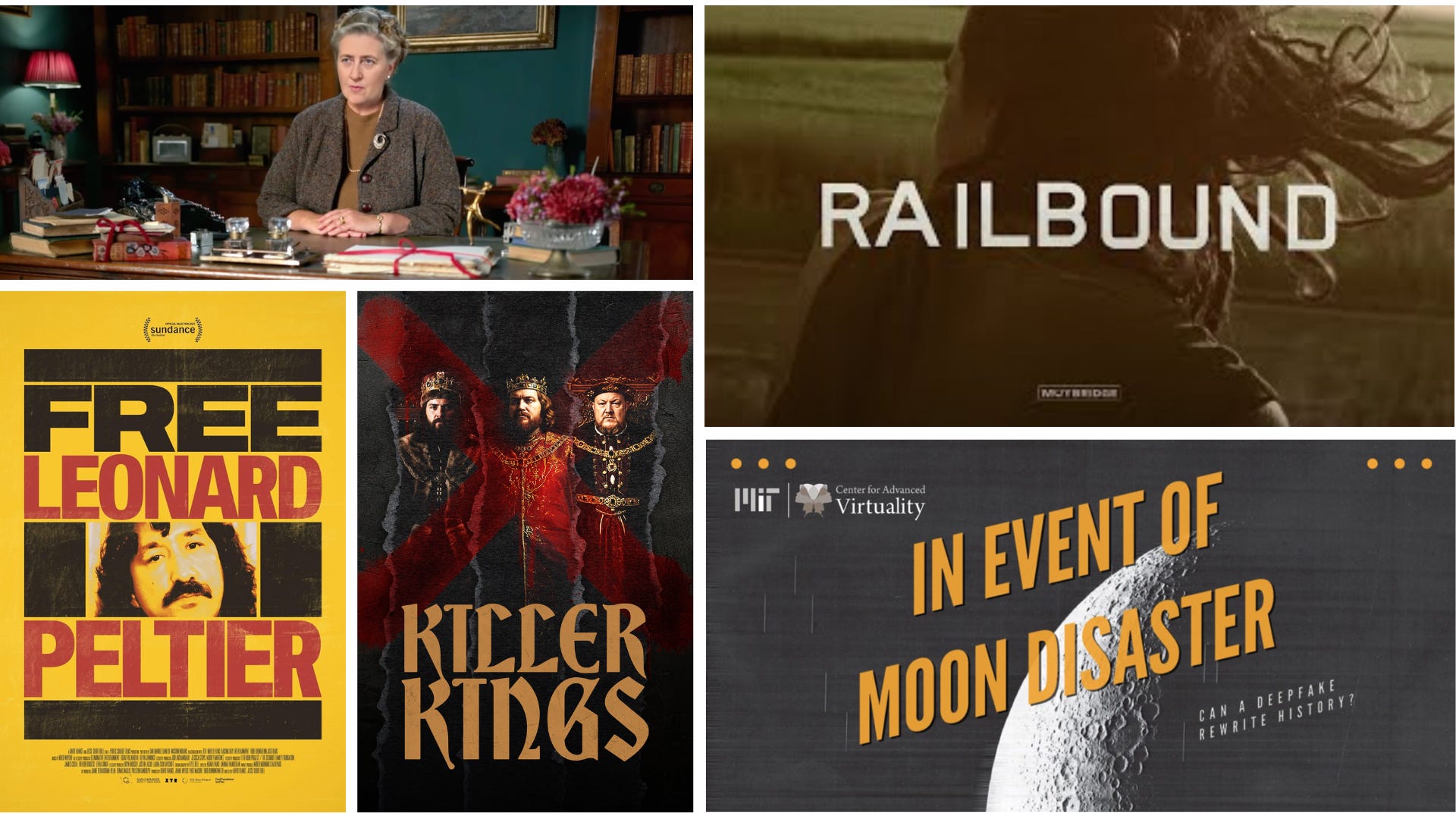
Some of the notable entries:
Free Leonard Peltier was the first feature doc at Sundance using AI-driven recreations, directed by David France alongside co-director Jesse Short Bull. France is the same filmmaker behind Welcome to Chechnya and its pioneering use of deepfake technology back in 2020, so it’s a meaningful continuation of that thread.
Killer Kings on Sky History became the first broadcast TV series with generative AI recreations, produced by firstlooktv and the team at Gennie. It’s an early signal of what is likely going to become a significant trend in historical and true crime television.
From the BBC, there’s an educational series using AI to bring Agatha Christie to life to teach viewers about writing. It sits on the perimeter of traditional nonfiction but it’s worth noting.
In short form, Jonathan Perry and Alex Naghavi’s award-winning Rail Bound does something genuinely interesting — it animates photojournalist Mike Brodie’s still images with AI, exploring this hybrid documentary space transparently and with real care.
And one of my favorite finds from digging into the past: Halsey Burgund’s In the Event of a Moon Disaster, which uses AI to explore a hypothetical history through a cloned version of Richard Nixon’s voice. Somehow I missed this one last year and I’m glad I found it.
*These examples and more are in the full presentation linked again here.
As always, if I’ve missed something or you disagree with any of this, please DM or reach out to me on Linkedin. That’s half the point of putting it out there.
This is one of those genuinely rare moments in media history where we’re watching major innovation land inside a legacy genre in real time. It produces all kinds of reactions — some discomfort, some real excitement. Both feel appropriate to me.
Some key resources for this interested in the space:
Archival Producers Alliance - leading voice in setting guidelines for AI use in Documentaries.
Coalition for Content Provenance and Authenticity - creating an open technical standard for publishers, creators and consumers to establish the origin and edits of digital content.
Recent Topaz Labs publication re: Preserving Intent in Nonfiction Media: A Responsible Approach to AI Enhancement

Great read as always. I just finished a new faux documentary using AI and would be happy to share it with you if interested. Please DM me for more info. https://substack.com/@jgesq/note/p-187644655?r=dj9ro&utm_medium=ios&utm_source=notes-share-action
Very interesting, Fred, thanks for compiling this list of films.